Introduction to Intersectional Disabilities
Intersectional disabilities occur when a person has two or more disabilities that affect how they access and participate in everyday life. These disabilities interact with each other and may create unique access needs that cannot be addressed by considering each disability separately. Accessibility is most effective when it considers different access needs at the same time, and provides flexible ways to communicate, move, learn, and participate.
Overview
Section titled “Overview”Many people live with more than one disability. These disabilities may affect different parts of daily life and often interact in ways that create unique barriers and access needs.
For example, a person may be Deafblind and rely on tactile communication, or communication that is felt, instead of visual or spoken information. Someone may have a mobility disability and a cognitive disability that affect both physical access and how instructions are understood. Another person may have a visual disability and a learning disability that require both screen reader compatibility and plain language.
Intersectional disabilities can include combinations of permanent, temporary, visible, invisible, congenital, acquired, physical, sensory, cognitive, learning, mental health, or chronic health disabilities.
Planning for accessibility should consider the impact to the whole person, rather than treat disabilities in isolation.
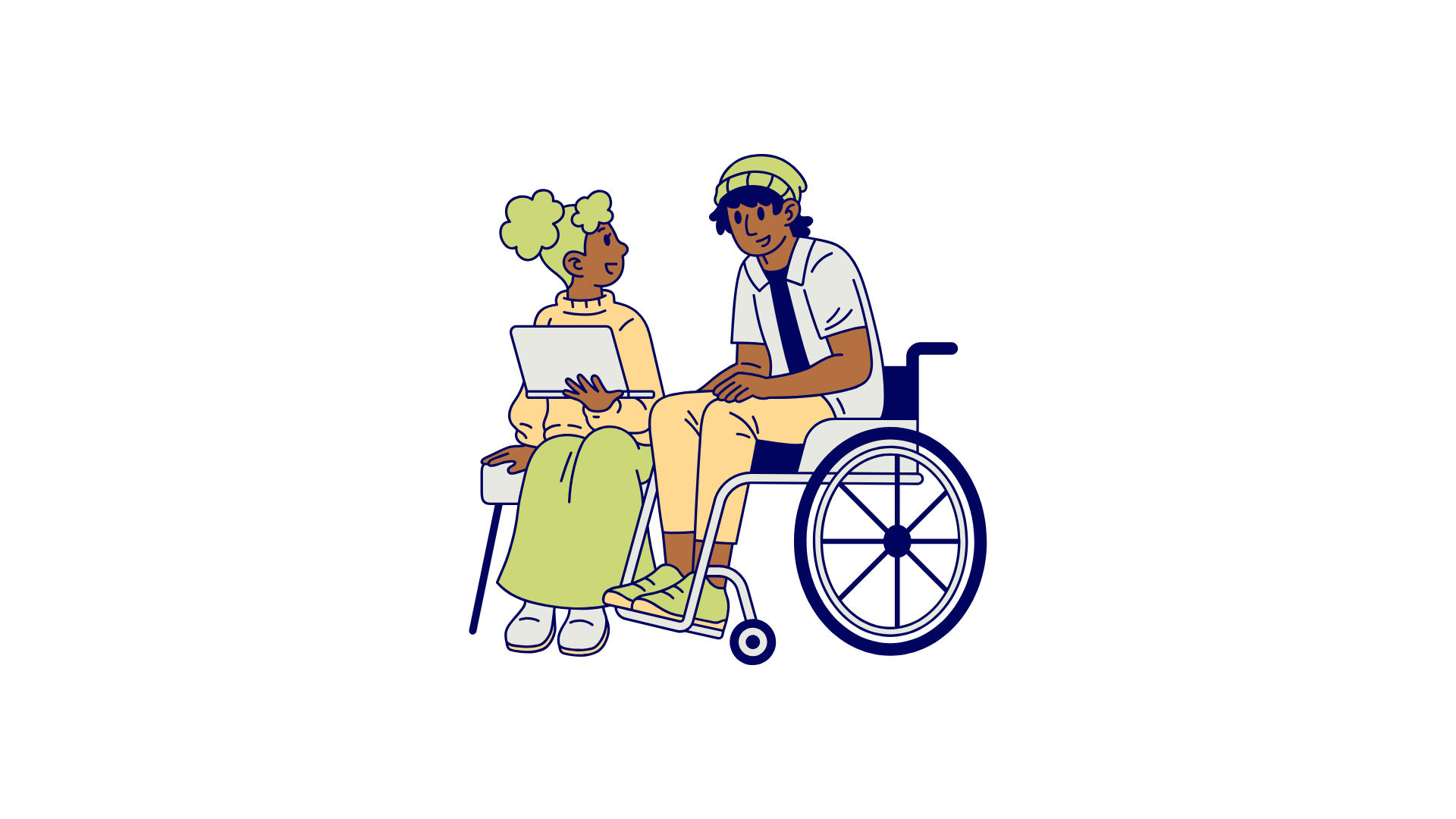
Common goals for people with intersectional disabilities include:
- Being able to participate in activities independently or with others
- Being able to communicate using preferred methods
- Being able to access information in multiple formats
- Being able to move safely through physical and digital environments
- Receiving accommodations that work together instead of creating new barriers
Some common intersectional disabilities and conditions include, but are not limited to:
- Attention-deficit/hyperactivity disorder (ADHD) combined with learning disabilities
- Autism combined with anxiety disorders and mental health conditions
- Cerebral palsy combined with speech disabilities
- Deafblindness
- Dementia, which often affects both cognition and movement
- Multiple sclerosis combined with cognitive disability
- Parkinson’s disease that affects movement and cognition
- Stroke affecting multiple functions
- Traumatic brain injury that affects cognition and movement
- Usher syndrome (a type of Deafblindness)
- Vision loss combined with mobility disabilities
- Sleep disorders and executive function disorders
Access needs vary widely because every combination of disabilities and access needs is different. This article discusses common patterns of combined access needs that may require coordinated accessibility solutions across multiple areas. More information is available from Usable.
Who is Helped?
Section titled “Who is Helped?”Understanding intersectional disabilities helps many groups create more effective accessibility solutions.
- People with intersectional disabilities receive accommodations that recognize how multiple disabilities affect one another instead of addressing only one disability at a time. They also receive supports that allow them to engage with the wider world safely and effectively.
- Employers, educators, and service providers learn to provide coordinated accommodations that support the whole person rather than isolated needs.
- Designers, developers, content creators, and event organizers create products, services, and environments that work for people with multiple disabilities without requiring numerous individual accommodations.
Intersectional Disability Needs
Section titled “Intersectional Disability Needs”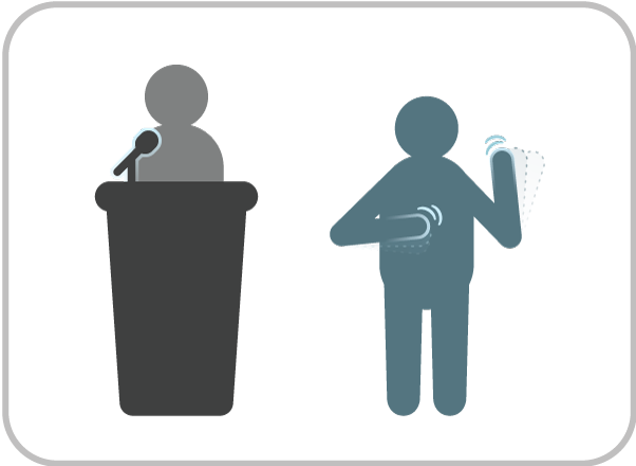
Communication Across Multiple Disabilities
Section titled “Communication Across Multiple Disabilities”This category includes people who:
- Use more than one communication method
- Experience barriers with spoken, written, visual, or auditory communication
- Need communication methods that work together
People with these needs often benefit from:
- Information provided in multiple formats
- Captions, transcripts, sign language, and plain language used together when appropriate
- Alternative and augmentative communication (AAC) alongside other communication supports
- Flexible participation methods during meetings, classes, and events
Learn more from Captions (Ta11y), Transcripts (Ta11y), Sign Language (Ta11y), Use Plain Language (Ta11y), Writing Accessible Content (Ta11y), and Usable: Vocal.
Access across Multiple Environments
Section titled “Access across Multiple Environments”This category includes people who:
- Need accessibility in both physical and digital environments
- Encounter barriers that affect movement, communication, and information simultaneously
- Require accommodations that remain consistent across settings
People with these needs often benefit from:
- Physical environments that are accessible without relying on assistance, or in a safe way
- Digital content that works with assistive technologies
- Accessible customer service options
- Flexible participation options for appointments, meetings, and events
Learn more from Accessibility, Accommodations & Equity (Ta11y), Alternative Content (Ta11y), Providing Help (Ta11y), Your Role in Accessibility (Ta11y), and Usable: Mobility.
Coordinated Accommodations
Section titled “Coordinated Accommodations”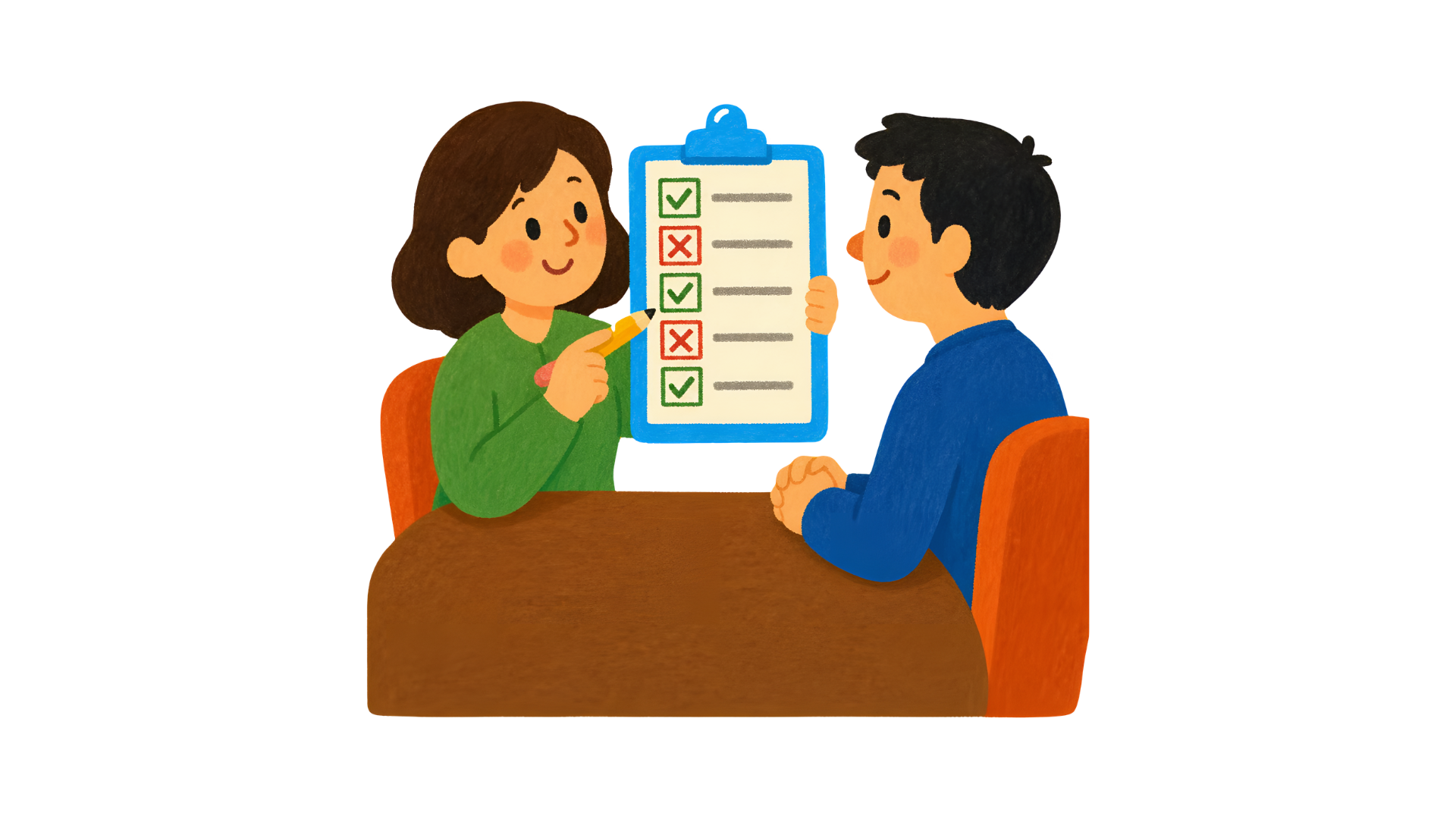
This category includes people who:
- Need several accommodations that work together
- Have accommodations for one disability that may affect another disability
- Benefit from individualized accessibility planning
People with these needs often benefit from:
- Accessibility plans that consider all disabilities together
- Coordinated accommodations across work, school, healthcare, and public services
- Flexibility as disabilities or support needs change
- Regular review of accommodations or supports with the individual
Learn more from Accessibility, Accommodations & Equity (Ta11y), Inclusive Language (Ta11y), Why Does Accessibility Matter? (Ta11y), and Your Role in Accessibility (Ta11y).
Accessibility Impacts
Section titled “Accessibility Impacts”People with intersectional disabilities often encounter barriers that result from multiple disabilities interacting with one another.
For example:
- A Deafblind person cannot independently access emergency information that is provided only through spoken announcements and visual displays. They may not receive this information in time to respond to the emergency.
- A student with low vision and dyslexia struggles when course materials are scanned PDFs that cannot be used with assistive technology.
- A person with a mobility disability and chronic pain cannot participate in an event when it requires extensive walking and offers no seating.
- An autistic customer with hearing loss cannot communicate effectively when customer service is available only by telephone in a noisy environment.
- A person recovering from a stroke experiences both speech and mobility barriers during medical appointments that assume verbal communication and independent movement.
Many barriers arise because accessibility features are considered individually instead of as coordinated supports.
Learn more from Accessibility, Accommodations & Equity (Ta11y), Alternative Content (Ta11y), and Your Role in Accessibility (Ta11y).
Supporting Methods
Section titled “Supporting Methods”General Guidelines
Section titled “General Guidelines”- Consider the combined impact to the whole person during planning, and when creating products or services.
- Provide more than one way to communicate, participate, and access information.
- Ask individuals what accommodations work best together.
- Build flexibility into products, services, policies, and environments.
- Ensure that physical environments meet common accessibility standards
- Design buildings and public spaces to meet recognized accessibility standards.
- Provide clear wayfinding, consistent signage, and information that can be accessed in more than one way.
- Include quiet spaces, accessible seating, and places to rest where appropriate.
- Review accommodations regularly as needs change.
Learn more from Accessibility, Accommodations & Equity (Ta11y), Your Role in Accessibility (Ta11y), and Usable: Cognitive.
Communication
Section titled “Communication”- Provide information in multiple accessible formats.
- Support captions, transcripts, sign language, AAC, and plain language where appropriate.
- Ensure customer service offers alternatives to telephone communication.
- Allow flexible communication methods during meetings and appointments.
Learn more from Captions (Ta11y), Transcripts (Ta11y), Sign Language (Ta11y), Use Plain Language (Ta11y), and Writing Accessible Content (Ta11y).
Technology and Digital Access
Section titled “Technology and Digital Access”- Ensure compatibility with assistive technologies.
- Support keyboard navigation, screen readers, screen magnifiers, and voice input.
- Avoid creating accessibility barriers when combining technologies.
- Test digital experiences with people who have multiple disabilities whenever possible.
Learn more from Alternative Content (Ta11y), Writing Alternative Text (Ta11y), and Your Role in Accessibility (Ta11y).
Environment and Policies
Section titled “Environment and Policies”- Coordinate accommodations across departments and services.
- Make accessibility information easy to find before people visit.
- Train staff to recognize that people may have multiple disabilities.
- Avoid assuming that one accommodation solves every accessibility need.
Learn more from Accessibility, Accommodations & Equity (Ta11y), Inclusive Language (Ta11y), Providing Help (Ta11y), and Your Role in Accessibility (Ta11y).
Examples
Section titled “Examples”- Maria is Deafblind.
- The challenge: Emergency announcements at her workplace rely on spoken messages and digital displays.
- What helps: Tactile alerts, tactile sign language interpretation, and written follow-up messages allow Maria to receive the same information as everyone else.
- David has low vision and dyslexia.
- The challenge: Training materials are provided only as scanned PDF documents that cannot be read with assistive technology.
- What helps: Accessible digital documents, screen reader compatibility, and plain language make the information usable.
- Aisha has cerebral palsy and a speech disability.
- The challenge: Medical appointments assume that patients can walk independently and answer questions verbally.
- What helps: Step-free access, extra appointment time, and acceptance of alternative and augmented communication methods (often called AAC)C allow Aisha to communicate comfortably with her healthcare team.
- Jordan has autism and hearing loss.
- The challenge: Team meetings rely on rapid spoken discussion in a noisy room.
- What helps: Live captions, meeting notes, quieter meeting spaces, and chat participation allow Jordan to contribute fully.
- Thomas is recovering from a stroke.
- The challenge: He temporarily experiences mobility, speech, and cognitive difficulties while returning to work.
- What helps: Flexible scheduling, written instructions, accessible routes, and additional transition time support his recovery.
Related Articles
Section titled “Related Articles”- Accessibility, Accommodations & Equity
- Alternative Content
- Captions
- Inclusive Language
- Providing Help
- Sign Language
- Transcripts
- Use Plain Language
- Why Does Accessibility Matter?
- Writing Accessible Content
- Writing Alternative Text
- Your Role in Accessibility
- Usable: Auditory
- Usable: Cognitive
- Usable: Mobility
- Usable: Motor Skills
- Usable: Safety
- Usable: Sensory
- Usable: Visual
- Usable: Vocal
References
Section titled “References”- World Health Organization (WHO): Disability
- World Health Organization (WHO): Assistive Technology
- Job Accommodation Network (JAN)
- National Center on Deafblindness
- Deafblind International
- Helen Keller National Center
- Usher Syndrome Coalition
- W3C: Making Content Usable for People with Cognitive and Learning Disabilities
- Intersectionality: Guidance for organisations of persons with disabilities
- Exploring the Common Types of Multiple Disabilities
- Understanding Multiple Disabilities: Definitions, Types, and Myths
- Multiple Disabilities - Understanding and Supporting Learners with Disabilities
- Understanding “Multiple Disabilities” | A Guide to the IDEA
- Multiple Disabilities In IEPs: What It Really Means (and What It Doesn’t!)